Physical Therapy for Cyclists: A Clinician’s Guide to Treating Riders Better (and Smarter)
Why Treating Cyclists Requires a Different Clinical Lens
If you treat endurance athletes long enough, cyclists will eventually make up a significant portion of your caseload. And when they do, you’ll notice a pattern: highly motivated patients, athletes with impressive VO2s and muscular strength… and stubborn, recurring complaints that don’t fully resolve with traditional rehab approaches.
That’s because physical therapy for cyclists isn’t just about pain management or just “getting stronger”. Cycling is a repetitive, constrained movement pattern performed for thousands of repetitions in a single position. If we don’t account for how the athlete interfaces with the bike, velocity, and power, we risk missing the real driver of symptoms as clinicians.
So if you’re a PT who works with (or wants to work with) cyclists, here are four important points to consider to think outside the box of traditional PT and confidently treat cyclists, improve outcomes, and differentiate your practice beyond basic sports rehab.
1. Cycling Biomechanics Are Unique. Know What To Look For
We all learn gait assessment in PT school. But riding a bike is not an evolutionary movement like walking or running. It requires a position that we essentially shoe-horn our body into. That means there are several key biomechanical realities every PT should account for when it comes to how the rider generates force on the bike:
The rider operates in a fixed sagittal plane, however the knee and foot still need to have some degree of frontal plane movement.
The posterior hip muscles need to be able to generate power from a lengthened position.
The paraspinals need to be able to sustain force in a flexed position.
The diaphragm needs to be able to function from a disadvantaged position.
Clinical implication: traditional strength or mobility screens such as gait assessment or squats may look “normal,” but the athlete lacks the ability to move and generate force when on the bike.
What to assess differently:
Hip and trunk control in sustained hip flexion.
Hip mobility in flexion both at and >90 degrees.
Ability of the thoracic spine and lumbar spine to work together in flexion.
Muscular coordination throughout the entire pedal stroke.
Ability of the diaphragm and ribcage to move under a constrained position.
2. Stop Saying Cyclists “Need Stronger Glutes”
We all know glute strength affects low back pain. It’s why monster walks and hip abduction exercises are the bread and butter for many PTs.
Most cyclists do not lack glute strength in a traditional sense. In fact, many will look quite strong in glute-focused exercises like hip thrusts or deadlifts. When it comes to hip strength, cyclists lack two things:
Hip stability
Cyclists don’t lack glute strength; they lack hip stability (think the muscles deep to the glutes: piriformis, gemelli, obturator internus, and quadratus femoris). These muscles create the stability that the glutes need to contract effeciently. Without stability deep to the glutes, it’s like trying to shoot a cannonball out of a canoe to revolve the pedal.
Glute endurance and power to operate in a lengthened position.
When it comes to glute strength, what cyclists’ glutes do lack is the ability to put out significant power in a lengthened position for a long period of time. The seated position on the bike changes the length-tension curve and requires the glue muscles to work at a more disadvantaged position.
This often presents as good sagittal plane hip extension, but decreased hip rotation with hips flexed at 90 degrees and poor single-leg abduction.
Clinical takeaway:
Your goal isn’t diffuse glute strength—it’s context‑specific glute function. Cyclists need the ability to coordinate hip mechanics before they can load them.
That means programming:
Hip strengthening in a flexed (glute-lengthened) position.
Exercises that initially bias coordination of hip stability over load
Positions that teach the glutes and the paraspinals how to work together in a flexed position.
This reframing alone often changes outcomes dramatically for cyclists with knee, hip, or low‑back complaints.
3. Bike Fit Is a Clinical Tool—Not an Optional Add‑On
In physical therapy for cyclists, bike fit is not separate from rehab—it’s part of the intervention. Not assessing bike fit when your patient has pain on the bike is like not assessing the hip when your patient comes in with knee pain.
You don’t need to be a professional fitter to make meaningful impact. Even basic observations of saddle height, reach, and pedaling can uncover drivers of symptoms.
That’s because:
Saddle height influences knee and hip load.
Excessive reach increases lumbar or cervical strain
Cleat position affects knee tracking and calf demand
Why PTs are uniquely positioned here:
We understand joint mechanics, tissue tolerance, and motor control.
We can relate positional changes directly to symptom behavior.
We can marry advanced biomechanical understanding with bike fit parameters.
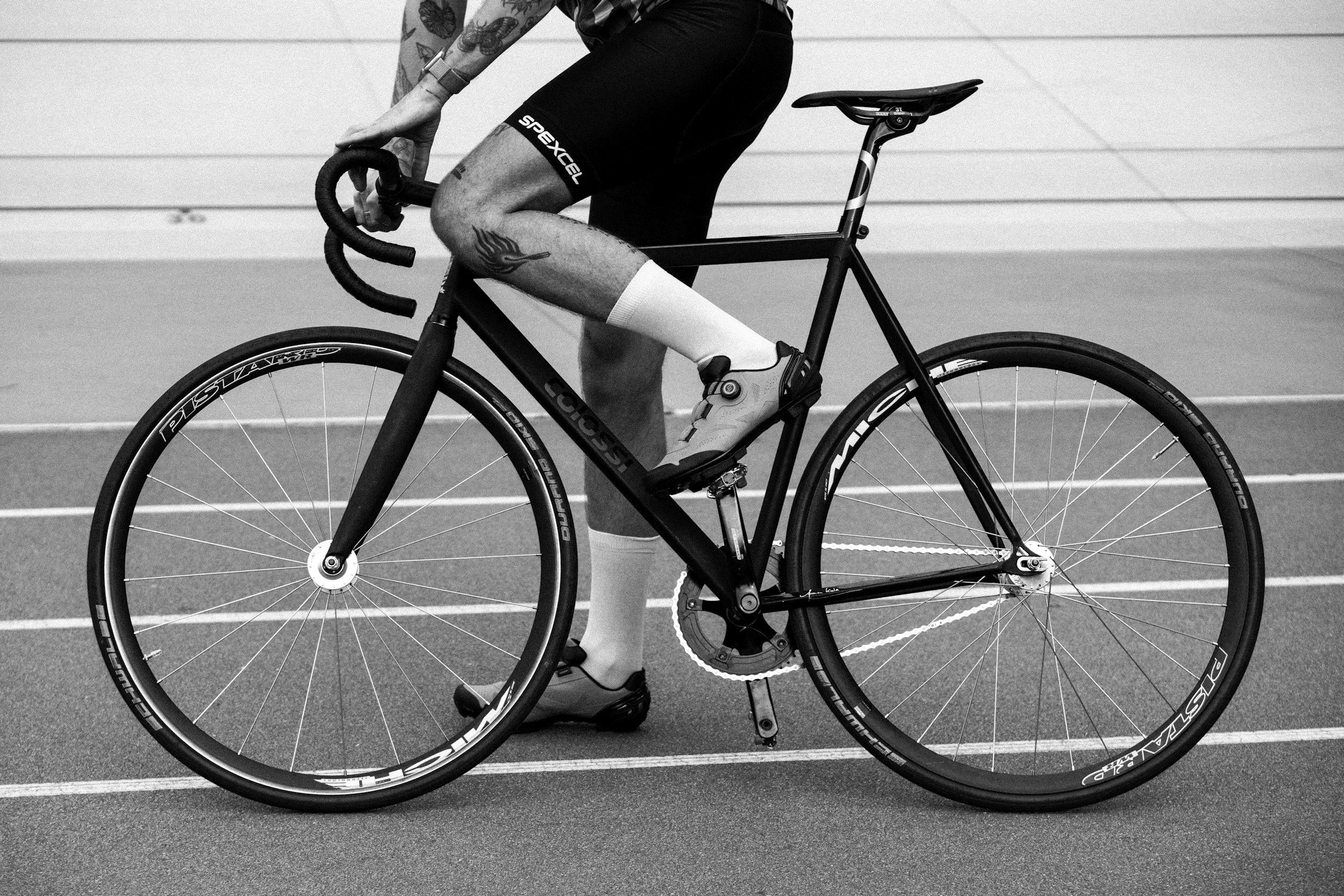
When treating cyclists in PT practice, think of the bike as an extension of the kinetic chain—because functionally, it is.
👉Not sure where to start? Download my Ultimate Bike Fit Checklist for a guide that you can use in-clinic to assess patients’ bike fits.
4. Change the Quality of the Movement Before You Load It
Cyclists already accumulate enormous training volume. Adding more load without improving movement quality and coordination often backfires.
Effective rehab and performance support focuses on:
Lumbopelvic control and coordination in sustained postures.
Ribcage mobility for breathing and force transfer.
Scapular stability for long‑duration weight bearing - the serratus anterior muscle is an incredibly important muscle for sustained posture on the bike that has implications in both neck and back pain.
Velocity and coordination of movement to generate force throughout the pedal stroke.
Final Thoughts: Treat the Rider, the Bike, and the System
Cyclists don’t just need to get stronger to address their pain. They need honed insight on how their body generate force in a unique position, communicates with the bike, and recruits muscles throughout the pedal stroke.
If you’re stuck with a cyclist who doesn’t seem to be progressing, make sure you’re taking the above points into consideration to move the needle in the right direction and get them back on the road and on the trail.
👉Want to Treat Cyclists With More Confidence (and Better Results)?
If you’re a physical therapist who wants to work with cyclists, but feels like you’re not sure how to provide long-lasting and successful outcomes, book a Clinician Consultation now for an hour-long, one-on-one, deep-dive in how to become your city’s go-to physical therapist for cyclists.
My mentorship is designed for PTs who want a guidance and clarity for treating cyclists:
How to assess cyclists differently
How to integrate bike fit into your PT evaluation
How to program strength and movement work that actually carries over to riding
This isn’t about becoming a bike fitter or chasing certifications. This is one-on-one mentorship and advice from someone who has treated hundreds of cyclists and gotten them back on the bike pain-free.
Sign up here and learn how to get the results you want for your patients on the bike today.